
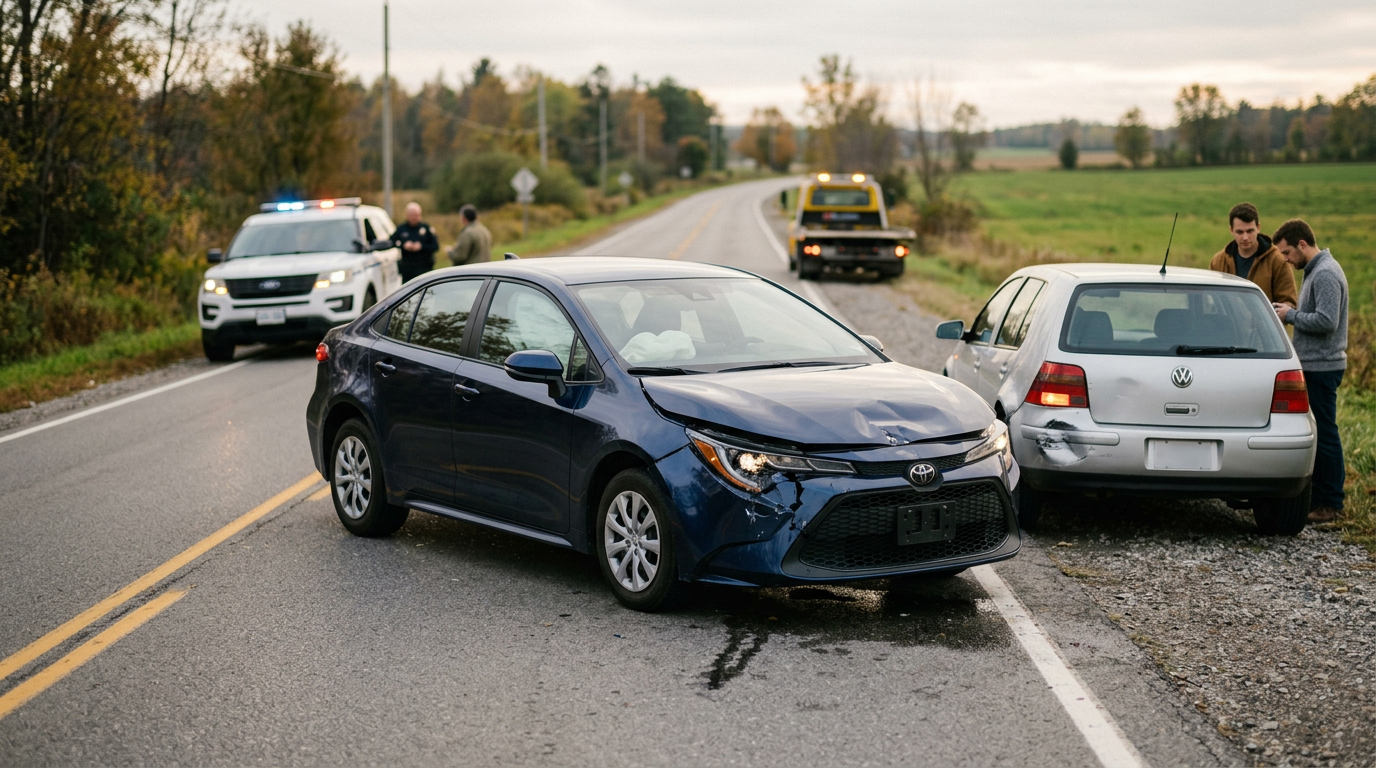
What to Do After a Car Accident: A Step-by-Step Guide
Published: March 12, 2026 · Last updated: March 12, 2026
TL;DR: Nearly 2.44 million people were injured in U.S. car crashes in 2023. What you do in the next 24 hours affects your medical recovery and your legal options. This guide covers what to do at the scene, in the first week, and before speaking to any insurance adjuster. Take the right steps now, and get a free case review before the other side sets the narrative.
You just got hit. Your hands are shaking. The other driver is walking toward you. And somewhere in the back of your mind, you’re wondering: what am I supposed to do right now?
Nearly 2.44 million people were injured in U.S. traffic crashes in 2023, according to the National Highway Traffic Safety Administration. Most of them faced the same moment of confusion you’re facing right now.
The steps you take in the next few hours matter more than most people realize. Evidence disappears. Insurance adjusters move fast. Injuries that feel minor today can show up in a big way tomorrow. If you’re ready to connect with a participating attorney, you can start a free car accident case review. This guide tells you exactly what to do after a crash, from the scene to the first week, without the legal jargon.
What Should You Do Immediately After a Car Accident?
The first minutes after a crash are about safety, documentation, and keeping your options open. Your job right now is to protect yourself, not to settle anything.
Here is what to do at the scene:
Check for injuries. Look at yourself, your passengers, and anyone else involved. If anyone is hurt or you’re not sure, call 911 immediately. Don’t move anyone who might have a neck or spine injury unless they’re in immediate danger.
Move to safety if you can. If the vehicles are drivable and you’re in a dangerous spot (a busy lane, an intersection), move them to the shoulder or a parking area. Turn on your hazard lights.
Call the police. File a police report even for minor accidents. Without one, the other driver can change their story later and there is no official record to protect you.
Exchange information. Get the other driver’s full name, phone number, insurance company and policy number, driver’s license number, and license plate. Get the same from any other involved vehicles.
Document everything. Take photos and video from multiple angles: both vehicles, all damage, the road layout, any skid marks, traffic signs, and your injuries if visible. Do this before anyone moves anything.
Get witness information. If bystanders saw what happened, ask for their names and phone numbers. Witness statements can be the difference in a disputed fault case.
Do not apologize or admit fault. Even saying “I’m sorry” or “I didn’t see you” can be used against you. Stay calm and polite, but say nothing about who caused the crash.
Request a free case review before you talk to any insurance adjuster.
Why You Should See a Doctor Even If You Feel Fine
After a car accident, seeing a doctor promptly is strongly advisable, even if you walked away from the scene without a scratch.
Adrenaline and the shock of a crash can mask pain for hours. Whiplash symptoms often develop within 24 to 72 hours of impact, not at the moment of collision. Concussions, herniated discs, and internal injuries can take days to become obvious. Internal bleeding has been documented appearing days or even weeks after a crash, with roughly half of delayed cases appearing in the first week.
Here is why this matters for your claim: the 72-hour window after a crash is critical for establishing medical causation. Insurance adjusters will argue that if you waited a week to see a doctor, your injuries weren’t caused by the accident. A prompt medical record with a clear timeline ties your injuries directly to the collision.
See a doctor within 24 to 48 hours of the accident. Tell them exactly what happened and every symptom you notice, even vague ones. Start a symptom journal that evening. Write down when pain starts, what it feels like, and how it affects your daily activities. That journal becomes evidence.
The most common delayed injuries to watch for:
- Whiplash and neck pain
- Headaches or pressure behind the eyes (possible concussion)
- Back pain or stiffness (possible disc injury or spinal compression)
- Numbness or tingling in arms or legs (possible nerve damage)
- Abdominal pain or tenderness (possible internal injury)
- Mood changes, sleep problems, or difficulty concentrating (possible traumatic brain injury)
If any of these appear after your initial visit, go back. Do not wait.
What Evidence Should You Preserve After a Crash?
Evidence from a car accident starts disappearing within hours. Dashcam footage gets overwritten. Road debris gets cleared. Witnesses forget details. Surveillance video from nearby businesses gets deleted on a rolling cycle.
Move quickly on all of the following:
Photos and video you took at the scene. Back them up immediately to cloud storage. Do not let them sit only on your phone.
The police report. Get the report number at the scene and request the full report from the police department as soon as it is available (usually within a few days).
Witness contact information. Reach out to any witnesses within a few days to confirm their contact details while their memory is fresh.
Medical records and bills. Keep copies of every document from every provider: emergency rooms, urgent care, follow-up visits, physical therapy, prescriptions.
Repair estimates and receipts. Get a written estimate for vehicle damage as soon as possible. Keep receipts for any rental car, Lyft, or Uber rides while your car is out of service.
Proof of lost wages. If you missed work, ask your employer for a letter or pay stub showing the days and amount lost.
Any communication from the other driver or their insurer. Do not delete voicemails or emails. Screenshot text messages.
If a commercial truck was involved, the situation is even more time-sensitive. Trucking companies are required to preserve electronic logging devices and black box data, but those records can be overwritten quickly. A legal hold letter needs to go out within days, not weeks. More on that in the guide to evidence to preserve after a truck accident.
The First 7 Days After a Car Accident
The week after a crash is when most people make mistakes that hurt their claims. Here is how to handle it.
Notify your own insurance company. Call your insurer and report the accident with basic facts: when, where, what happened. Do not give a recorded statement yet, even to your own insurer, without understanding what you’re agreeing to. Stick to the facts and say you are still seeking medical care.
Do not give a recorded statement to the other driver’s insurance. You are not required to. Their adjuster is not on your side. Everything you say in a recorded call will be analyzed for inconsistencies or admissions that reduce your payout.
Follow your doctor’s instructions. Attend every appointment. Gaps in treatment are used by insurers to argue that your injuries were not serious or that you stopped treating because you recovered.
Do not sign anything. A medical release that seems routine can give the insurer access to your entire medical history. Any settlement offer in the first week is almost certainly too low. Once you sign a release, your claim is closed.
Keep a running expense log. Track every cost related to the accident: medical co-pays, prescriptions, transportation to appointments, help you’ve hired for things you can’t do while injured.
What Should You Never Say to an Insurance Adjuster?
The insurance adjuster who calls you works for the insurance company, not for you. Their job is to close your claim for as little money as possible.
Avoid these statements:
“I’m fine.” Even if you feel okay in the moment, symptoms may not have appeared yet. This statement will be used to argue your injuries were minor or pre-existing.
“I’m sorry” or “It was partly my fault.” Any admission of responsibility, however casual, becomes part of the claim record.
“I’ll give you a recorded statement.” You are not legally required to give a recorded statement to the other driver’s insurer. Recorded statements are edited and analyzed for anything that can reduce your payout. Politely decline.
“The offer sounds fair.” Early settlement offers are almost always made before the full extent of injuries is known. Once you accept and sign, you can’t come back.
Too much detail about your daily life. Saying “I’ve been pretty active, just a little sore” gives them ammunition to downplay your injuries.
For a full breakdown of how these conversations go and how to handle them, see the guide on what not to say to the insurance adjuster after an accident.
What If You Were Partly at Fault?
In most states, being partly at fault does not end your claim. But the rules vary significantly by state, and getting this wrong is costly.
Most states use comparative fault, which means your compensation is reduced by your percentage of fault. If your damages total $80,000 and you are found 20% at fault, you recover $64,000. The two main versions are:
- Pure comparative fault (used in states including California, New York, Florida, and Alaska): you can recover compensation even if you are 99% at fault, reduced by your share.
- Modified comparative fault (used in the majority of states, including Texas, Georgia, Illinois, and Pennsylvania): you can recover only if your fault is below a threshold, typically 50% or 51%.
Then there are five jurisdictions where the rules are much stricter: Alabama, Maryland, North Carolina, Virginia, and Washington D.C. These jurisdictions follow contributory negligence, which means that if you are found even 1% at fault for the accident, you may be barred from recovering any compensation at all. That makes documentation of the other driver’s fault especially critical in those states.
Regardless of your state, the insurance company will try to assign you as much fault as possible. Strong evidence, a clear medical record, and legal guidance reduce that risk. See the full guide on recovering compensation when you were partly at fault for more detail on how the rules apply in your state.
How Long Do You Have to File?
Most people assume they have plenty of time. That assumption costs claims.
The legal deadline to file a personal injury lawsuit (the statute of limitations) varies by state, ranging from 1 year to 6 years. Common examples:
- 1 year: Tennessee (among the shortest in the country)
- 2 years: California, Texas, Georgia, Florida, Pennsylvania, Louisiana (updated 2024), Kentucky, and many others
- 3 years: New York, Massachusetts, Montana
- 6 years: Maine (personal injury)
If the other vehicle was owned or operated by a government entity (a city bus, a state-owned vehicle, a municipal employee on duty), the deadline can be as short as 60 to 180 days from the date of the accident, far shorter than the standard civil deadline.
But even before you hit a legal deadline, evidence deteriorates. Surveillance footage is deleted. Witnesses move. Memories fade. Crash scene evidence gets cleaned up. The legal deadline is not the practical deadline for building a strong case. Start early.
For the full state-by-state breakdown and what to watch for, see the guide on how long you have to file after a car accident.
What to Do Now
The steps that protect your health and your legal options are the same steps: get medical care fast, preserve evidence before it disappears, and do not let the insurance company close the clock on your claim before you know the full picture.
If you were injured and you are not sure what your situation looks like, that is exactly what a free case review is for. Answer a few quick questions, and a participating attorney who handles injury claims will reach out, at no cost and no obligation.
Start your free case review now
Frequently Asked Questions
Should I call the police after a minor car accident?
Yes. A police report provides an official record of the crash that can prevent the other driver from changing their account later. Even if damage looks small, call the police or file a report at your local station. Many insurers require a police report before processing a claim.
How long do I have to report a car accident to my insurance company?
Most insurance policies require prompt notice, which typically means within 24 to 72 hours, though the exact language varies by policy. Waiting too long can give your insurer grounds to deny coverage. Report the accident promptly, even if you are not sure you will file a claim.
What if the other driver doesn’t have insurance?
You may be able to file a claim under your own uninsured motorist (UM) coverage, if your policy includes it. UM coverage is designed to compensate you when the at-fault driver has no insurance or not enough to cover your losses. See the guide on uninsured and underinsured motorist coverage for a full breakdown.
Can I still file a claim if I delayed getting medical treatment?
Delays in treatment make claims harder to win, but they do not automatically end your claim. You will need to explain the gap (fear of medical costs, not realizing the severity, waiting to see if symptoms resolved) and ideally have documentation connecting your injuries to the accident. A participating attorney can advise on the strength of your specific situation.
Do I need a lawyer for a car accident?
Not every car accident requires an attorney. But if you have injuries, if fault is disputed, if you received a quick settlement offer, or if the other driver has no insurance, legal guidance can be the difference between a fair outcome and a significantly undervalued claim. A free case review costs you nothing and helps you understand your options before you decide.
Related guides:
- Delayed Symptoms After a Car Accident
- What Not to Say to the Insurance Adjuster After an Accident
- Can You Recover Compensation If You Were Partly at Fault?
- How Long Do You Have to File a Car Accident Lawsuit?
The information on this page is for general informational and educational purposes only. It is not legal advice and does not create an attorney-client relationship. Personal Injury Counsel is an advertising and lead generation service, not a law firm. Laws vary by state and change over time. Consult a licensed attorney for advice specific to your situation. Full Disclaimer · This is an advertisement.