
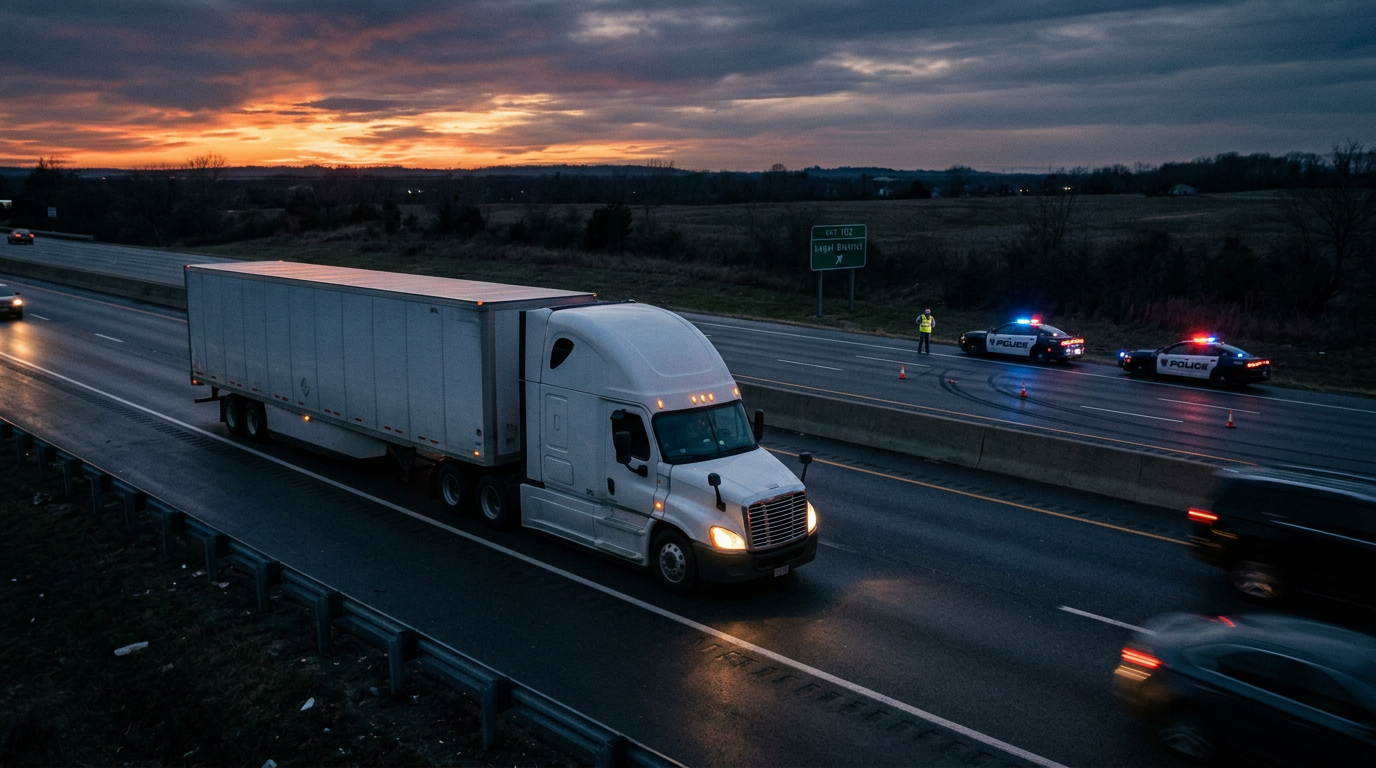
Evidence to Preserve After a Truck Accident (Before It Disappears)
Published: March 12, 2026 · Last updated: March 12, 2026
TL;DR: Truck accident evidence vanishes fast, and trucking companies know it. Electronic logging device (ELD) data, dashcam footage, black box data, driver logs, maintenance records, and drug/alcohol test results can all be deleted, overwritten, or legally destroyed within days if you don’t act. A formal preservation demand (litigation hold letter) sent immediately after the crash is not optional. It is the first move in a serious truck accident case. This guide covers every category of evidence, who controls it, and how long you have to secure it.
A crash involving a commercial truck is not the same as a collision between two passenger vehicles. The scale of injury is often far greater. But more importantly for your legal case: the number of potentially responsible parties is larger, the evidence is more complex, and the entities with the most relevant information (the trucking company, the carrier, the shipper, the maintenance contractor) have legal teams experienced at making that evidence disappear.
Acting immediately after a truck accident to preserve evidence is critical. The strength of your case depends heavily on early evidence preservation.
Why Truck Accident Evidence Disappears So Quickly
Several categories of truck accident evidence have legally short retention periods or are stored on systems that automatically overwrite:
- ELD (Electronic Logging Device) data: Federal regulations require ELDs to retain data for 6 months. However, internal company systems may retain it for less time, and if data is not specifically preserved, it can be overwritten in 30 days.
- Dashcam and in-cab camera footage: Overwritten in cycles, sometimes as short as 48 to 72 hours.
- ECM/black box data: Some systems retain data until overwritten by newer data, which can happen quickly in active fleets.
- Drug/alcohol test results: Post-accident drug and alcohol testing is required by FMCSA regulations, but results are held by employers and testing labs for specific retention periods.
- Driver’s logs (if paper): Can be altered or destroyed.
- Maintenance records: May be purged on regular cycles.
The trucking company’s response team (and they do have one) will be at the scene or making calls within hours. Their first priority is their own legal position.
Your first priority must meet that urgency.
The Litigation Hold Letter
The single most important immediate action is sending a litigation hold letter (also called a preservation demand or spoliation letter) to the trucking company, the carrier, the driver’s employer, and any other potentially responsible party.
This letter formally notifies them that litigation is anticipated and demands that they preserve all relevant evidence, even data that would otherwise be deleted or overwritten under normal retention schedules. Once notified, intentional destruction of evidence constitutes spoliation, which can result in adverse inference jury instructions, sanctions, and other serious legal consequences against the party that destroyed evidence.
An attorney should send this letter, ideally within 24 to 48 hours of the crash. If you can’t retain an attorney that quickly, some attorneys will handle this step as an emergency before the formal representation agreement is signed.
Category 1: Electronic Logging Device (ELD) Data
Since December 2017, most commercial motor vehicles operating in interstate commerce are required under FMCSA rules (49 CFR Part 395) to use electronic logging devices to record hours of service (HOS). ELD data reveals:
- Total hours driven that day and in the preceding days/weeks
- Whether the driver was compliant with federal hours of service limits (11-hour daily driving limit; 14-hour on-duty window; 60/70-hour weekly limits)
- Timestamps for duty status changes (driving, on-duty not driving, off-duty, sleeper berth)
- Vehicle motion data in some systems
Hours of service violations are among the most significant liability factors in truck crashes. A driver who has been behind the wheel for 13 hours in violation of federal limits, or who falsified their logs, represents a negligence finding that directly affects both liability and potential punitive damages.
Who controls it: The carrier/trucking company and the ELD provider. How to get it: Litigation hold letter and formal discovery; subpoena to the ELD provider if needed. Urgency: Critical. Demand immediately.
Category 2: Electronic Control Module (ECM) / Black Box Data
Commercial trucks have an Electronic Control Module that records vehicle data, similar to the flight data recorder in aircraft. ECM data typically includes:
- Vehicle speed in the seconds before the crash
- Throttle position and engine RPM
- Brake application (when and how hard)
- Cruise control status
- Hard braking events and sudden decelerations in the preceding period
- Fault codes
This data provides an objective, time-stamped record of what the truck was doing in the moments before impact. It can directly contradict a driver’s account of events.
Who controls it: The trucking company, which typically has access to real-time telematics and ECM data. How to get it: Litigation hold letter; physical preservation demand; in litigation, subpoena of the truck itself for imaging. Urgency: Critical. The ECM must be imaged by a qualified expert; the truck should not be repaired or returned to service before this is done.
Category 3: Dashcam and In-Cab Camera Footage
Many commercial trucks are equipped with forward-facing (and sometimes rear-facing or in-cab) cameras. These may be:
- Event-triggered cameras: Record and retain footage from a window around hard braking events, collisions, or sudden movements
- Continuous recording cameras: Record and overwrite on a loop, typically 72-hour or shorter cycles
In-cab cameras (facing the driver) may capture driver behavior in the seconds before impact: cell phone use, inattention, drowsiness, eating, or other distraction.
Forward cameras may show road conditions, traffic patterns, and the entire sequence of events leading to the crash.
Who controls it: The trucking company and/or the camera system provider. How to get it: Litigation hold letter with specific reference to camera systems and all stored footage; emergency motion for preservation in litigation if needed. Urgency: Extremely high. Footage can be overwritten within 48 to 72 hours. This must be demanded immediately.
Category 4: Driver’s Hours of Service Records and Logs
Even with ELDs, drivers may have additional paper records, manual amendments, or supporting documents (fuel receipts, toll records, weigh station receipts) that corroborate or contradict the logged hours. Pre-ELD mandate, paper logs were easily falsified; even in the ELD era, drivers can record inaccurate duty status.
The FMCSA requires carriers to retain driver HOS records for 6 months. Demand them in the litigation hold letter.
Category 5: Driver’s Qualification File
Every commercial driver must have a qualification file maintained by their carrier. This includes:
- CDL license and endorsements
- Medical examiner’s certificate (required for interstate drivers)
- Pre-employment drug and alcohol test results
- Previous employer safety history (carriers are required to investigate the prior 3 years of employment)
- Driver’s accident history
- Annual review of driving record
If the driver had prior violations, a suspended CDL, a failed drug test, or a record of HOS violations, and the company employed them anyway, this creates a negligent hiring or negligent retention claim against the carrier, potentially supporting punitive damages.
Category 6: Post-Accident Drug and Alcohol Testing Records
FMCSA regulations (49 CFR Part 382) require that carriers conduct post-accident drug and alcohol testing of drivers involved in crashes that result in:
- A fatality
- A citation to any driver AND someone was taken from the scene by EMS
- A citation to any driver AND a vehicle was towed from the scene
Alcohol tests must be conducted within 2 hours (and no later than 8 hours) of the crash. Drug tests must be collected within 32 hours.
These results are retained and must be produced in discovery. If a carrier fails to conduct required post-accident testing, that failure is itself evidence of negligence and a federal regulatory violation.
Category 7: Maintenance and Inspection Records
Mechanical failure is a contributing cause in a significant portion of serious truck crashes. Relevant maintenance records include:
- Driver Vehicle Inspection Reports (DVIRs): drivers are required to submit daily inspection reports noting any defects
- Carrier maintenance logs showing when defects were reported and when (or whether) they were repaired
- Pre-trip inspection records for the day of the crash
- DOT roadside inspection records (available through the FMCSA SAFER database publicly)
- Tire, brake, and steering system maintenance history
- Any recalls affecting the vehicle that were not addressed
If brake failure or tire blowout contributed to the crash, maintenance records establishing that the defect was known and not repaired are direct evidence of negligence and potentially of punitive conduct.
Category 8: Cargo Loading and Shipping Records
If improper loading contributed to the crash (an overloaded trailer, an improperly secured load, a shifting load that affected handling), the responsible parties extend beyond the driver and carrier to include the shipper and/or the loading facility.
Relevant records include:
- Bill of lading (cargo manifest)
- Weight tickets from loading dock and weigh stations
- Loading crew records and procedures
- Oversize/overweight permits (or the absence of required permits)
Cargo-loading liability often involves a separate defendant (the shipper) with its own insurance coverage, which expands the total recovery available.
Category 9: Scene Evidence and Witness Information
Physical evidence at the scene degrades quickly. In addition to standard crash documentation:
- Skid marks, gouges, and debris fields indicate the vehicles’ paths and point of impact
- Yaw marks from tire friction show vehicle trajectories
- Vehicle position after impact should be photographed before vehicles are moved
- Road conditions (wet pavement, signage, road construction, lighting)
- Weather data at the time of the crash (preserved through NOAA weather records)
Witnesses to truck crashes often include other truckers, who may have dashcam footage or CB radio communications from the time of the crash. Get contact information from everyone at the scene.
Category 10: FMCSA Safety Records
The Federal Motor Carrier Safety Administration maintains public records on every registered carrier, accessible through the FMCSA SAFER database (safer.fmcsa.dot.gov). This includes:
- Carrier safety ratings
- Out-of-service rate history
- Previous crash history
- Vehicle and driver inspection violation history
- Any consent orders or compliance reviews
A carrier with a history of violations and a poor safety rating, yet who continued operating, is relevant to claims of corporate negligence and to the admissibility of punitive damages.
What to Do Right Now
-
Retain a truck accident attorney immediately. The litigation hold letter, expert preservation of the ECM, and access to federal regulatory records all require legal representation. Truck accident cases are not DIY matters.
-
Do not speak to the trucking company’s insurer. Their claims team is already working the case. Say nothing until you have representation.
-
Document your own evidence. Photos of the scene, both vehicles, your visible injuries, road conditions, weather, and any identifying information from the truck (DOT number, company name, license plate) should be captured immediately.
-
Seek medical attention. As with any serious collision, injuries may not be immediately apparent. Get evaluated the same day.
-
Write down what you remember. The sequence of events, what you saw before impact, what the driver did or said afterward, any unusual behavior. Write it down while it’s fresh, before memories become inconsistent.
Frequently Asked Questions
What is the DOT number on a truck and why does it matter?
Every commercial motor vehicle operating in interstate commerce has a USDOT number issued by the FMCSA. It identifies the carrier (the company operating the truck). With the DOT number, an attorney can immediately pull the carrier’s full safety record, crash history, and inspection violations from the FMCSA SAFER database. Note it at the scene if you can.
What if the trucking company denies having dashcam footage?
If a litigation hold letter was sent and the company later claims no footage exists, you can challenge this through discovery depositions of the fleet manager and the camera system provider. If footage was destroyed after notice of the litigation hold, that is spoliation: a serious evidentiary violation that courts can remedy with adverse inference instructions or sanctions.
Can the truck driver be personally liable in addition to the company?
Yes, but commercial truck drivers rarely have personal assets worth pursuing. The more significant parties are typically the carrier (employer), the truck owner (if leased separately), the shipper, and the maintenance contractor. An attorney can help identify all potentially liable parties quickly.
What if the accident involved a leased truck or an owner-operator?
Liability in leased truck and owner-operator arrangements is complex. The FMCSA’s “statutory employee” doctrine creates carrier liability for accidents involving leased trucks operating under the carrier’s authority, even if the driver is technically an independent contractor. This is a frequently litigated area. Don’t assume the carrier escapes liability because the driver was a contractor.
The Bottom Line
Truck accident evidence is time-sensitive and controlled by parties who have every incentive to see it disappear. The first 24 to 48 hours after the crash are decisive. An attorney who handles truck accidents should be sending preservation demands and contacting the fleet insurer before most people have even made a doctor’s appointment.
For a full overview of your legal options after a truck accident, see our truck accident case review page to connect with a participating attorney.
If you were in a truck accident, start a free case review as soon as possible. The evidence retention clock is already running.
Related guides: