
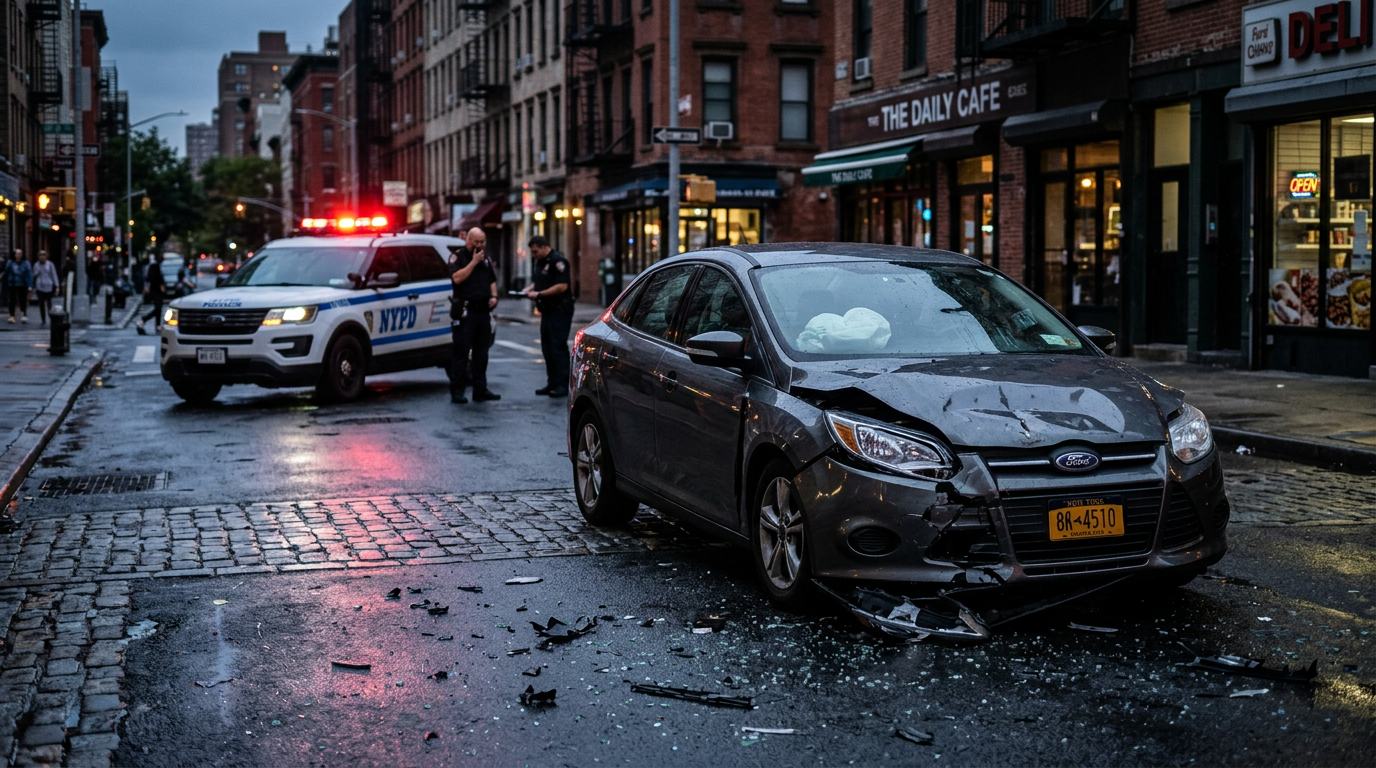
Hit-and-Run Accident: What to Do Next and How to Recover Compensation
Published: March 12, 2026 · Last updated: March 12, 2026
TL;DR: Being hit by a driver who flees doesn’t end your options. You can pursue compensation through your own uninsured motorist (UM) coverage, your collision coverage, or, if the driver is later identified, through a traditional liability claim. Your first minutes after the accident matter enormously: gathering any identifying information, documenting the scene, finding witnesses, and reporting to police immediately all directly affect what you can recover. Most states require a police report to file a UM claim.
The other car accelerated and was gone before you could process what happened. Maybe you caught part of a license plate. Maybe there was nothing to catch at all.
A hit-and-run accident is disorienting in a way that a typical crash is not, because the script everyone knows (exchange information, call insurance) immediately breaks down. You’re left at the scene alone, possibly injured, with no one to hold responsible.
But there are paths forward. This guide covers what to do in the first minutes, first hours, and first weeks after a hit-and-run, and how to build a claim when the other driver has vanished.
What to Do at the Scene
The actions you take in the immediate aftermath will define what evidence is available for your claim. Move quickly, even if you’re shaken.
Stay. Do not follow. Chasing the other driver is dangerous, can be treated as road rage by law enforcement, and takes you away from the scene where evidence exists. Stay put.
Call 911. Calling 911 is strongly advisable and is required by law in many jurisdictions. A police report is required by virtually every insurance company as a condition of making a UM claim for a hit-and-run. File it even if you don’t think you’re seriously injured. Call immediately, not later.
Document everything you saw about the other vehicle. Even partial information is useful:
- Color, make, model if you know it
- Any part of the license plate you can recall (write it down immediately while it’s fresh; even one or two characters narrow the search)
- Any distinctive features: damage, decals, bumper stickers, unusual color combination
- Direction of travel after leaving the scene
Check for witnesses. Look around. Other drivers, pedestrians, cyclists, or business owners with storefront cameras may have seen or recorded the incident. Approach them before they leave. Get names and phone numbers. Note which businesses have visible cameras facing the street.
Photograph the scene. Document your vehicle, the damage, any debris or paint transfer, the road layout, any skid marks, and your visible injuries if you have them.
Check for cameras. Red light cameras, traffic monitoring cameras, business surveillance cameras, residential doorbell cameras, and dashcam footage from other vehicles can all potentially capture the fleeing driver. Note the locations of any visible cameras in the immediate area. Your attorney can help request footage before it’s overwritten.
Seek medical care. Even if you feel fine, get evaluated. Injuries from a hit-and-run are the same as any other car accident. Adrenaline suppresses pain, and many serious injuries have a delayed onset.
Report to Police (and Follow Up)
File a police report at the scene or at the station immediately. When you file:
- Provide all vehicle description information you have, including any partial plate information
- Tell the officer about any witnesses you identified and any camera locations you noted
- Get the report number; you’ll need it for your insurance claim
Follow up with the police department within a few days to check whether the driver was identified. License plate recognition systems, traffic cameras, and witnesses occasionally lead to driver identification even when it seems unlikely at the scene. Some jurisdictions actively investigate hit-and-run accidents, particularly where injuries are involved. Others close them quickly without further investigation. In that case, follow-up by you or your attorney is necessary.
Report a hit-and-run as a hit-and-run, not a “parking lot accident” or a “minor collision.” How the incident is characterized in the police report affects your insurance coverage options.
How to Get Compensated When the Driver Isn’t Found
Option 1: Your Uninsured Motorist (UM) Coverage
Uninsured motorist coverage is designed for exactly this scenario. Because a driver who fled is treated the same as an uninsured driver for claims purposes, your UM coverage, if you have it, becomes the primary recovery path.
UM coverage pays for:
- Medical expenses
- Lost wages
- Pain and suffering (in most states)
- Other personal injury damages up to your UM policy limit
Key requirements for a hit-and-run UM claim:
- Most states require a police report filed within a specific timeframe (24 to 72 hours is common; some states are stricter)
- Some states require physical contact between the vehicles, meaning a “phantom driver” who caused you to swerve without making contact may not qualify. The physical contact requirement is present in: Alabama, Alaska, Arkansas, Georgia, Indiana, Kentucky, Louisiana, Mississippi, Montana, Nebraska, North Carolina, Pennsylvania, South Carolina, Tennessee, and West Virginia, among others. States that do not require physical contact include California, Florida, New York, Ohio, Texas, and several others. Confirm with your policy and your state’s current rules.
- You must report the claim to your insurer promptly (typically within 30 days of the accident)
Check your own policy limits. If your UM coverage limit is $25,000 and your injuries resulted in $80,000 in damages, your recovery under that policy may be capped at $25,000 unless you have additional coverage layers (e.g., umbrella policy). An attorney can help identify all available coverage sources.
Option 2: Your Collision Coverage
If you have collision coverage on your own vehicle, it covers the cost of repairing or replacing your vehicle regardless of who was at fault and regardless of whether the other driver is identified. You’ll pay your deductible; your insurer covers the rest. This is independent of your UM claim.
Option 3: MedPay or PIP Coverage
If you have medical payments coverage (MedPay) or personal injury protection (PIP) on your policy, these pay for your medical expenses immediately and without regard to fault. They’re first-dollar coverage: they pay regardless of who hit you or whether they’re identified.
Option 4: If the Driver Is Identified Later
Police investigation, witness tips, surveillance footage, or social media posts sometimes lead to identification of the driver weeks or even months later. If the driver is identified, your claim converts to a standard liability claim against that driver and their insurer. At that point, the same framework as any other car accident applies (liability, damages, and potentially a lawsuit if settlement negotiations fail).
Keep documentation of your medical treatment and other damages from the start, even when the driver is unknown, so you’re ready to pursue a full claim if they’re found.
Hit-and-Run: State-Specific Considerations
No-fault states: In states with no-fault insurance systems (Florida, Michigan, New York, New Jersey, Pennsylvania, Hawaii, Kansas, Kentucky, Massachusetts, Minnesota, North Dakota, and Utah), your own PIP coverage pays first for medical expenses regardless of fault, including in a hit-and-run. You can still pursue a UM claim for damages that exceed your PIP coverage, subject to your state’s tort threshold requirements.
Low/no UM coverage: Some drivers don’t carry UM coverage, either because they waived it or because it was not mandatory. If you don’t have UM coverage, your options after a hit-and-run are more limited: collision coverage for vehicle damage, MedPay for medical bills (if you have it), and potentially the state’s uninsured motorist fund (available in a minority of states for hit-and-run victims who meet specific requirements).
State uninsured motorist funds: A small number of states operate funds that provide limited compensation to hit-and-run victims who have no UM coverage. These funds typically have low caps and strict eligibility requirements. They are a last resort, not a primary path.
What the Insurance Company May Do
When you file a UM claim for a hit-and-run, your own insurer essentially steps into the shoes of the at-fault driver, but that doesn’t mean they’re on your side. They will investigate the claim and may:
- Dispute whether an actual hit-and-run occurred (particularly for single-car damage claims where there’s no physical contact or corroborating witness)
- Argue about injury causation or severity
- Offer a low initial settlement figure
Your rights in a UM claim include the right to negotiate, the right to dispute their findings, and in most states, the right to pursue binding arbitration or a lawsuit against your own insurer if negotiations fail. An attorney who handles UM claims regularly knows how to push back effectively.
Frequently Asked Questions
Can I file a UM claim if I don’t know the other driver’s plate?
Yes. Most UM policies cover hit-and-run accidents regardless of whether the other driver is identified. The typical requirements are a police report, timely claim reporting, and (in some states) physical contact between vehicles. Check your policy for your insurer’s specific requirements.
What if the hit-and-run happened in a parking lot?
Parking lot hit-and-run accidents (someone hitting your parked car and leaving) are typically handled through collision coverage or the property damage component of your UM coverage (if your policy includes UMPD, or “uninsured motorist property damage”). You may also find a note, witness, or camera that identifies the driver.
What if I only have minimum required coverage?
Minimum liability coverage does nothing to help you in a hit-and-run, because it covers what you do to others, not what is done to you. If you have no UM coverage and no collision coverage, your options are very limited. This is the scenario where state victim compensation funds, if available, become relevant.
How long do I have to file a UM claim?
Your insurance policy will specify notice requirements (typically 30 days, though some policies allow longer). The statute of limitations for filing a lawsuit on a UM claim follows your state’s general personal injury deadline (one to six years depending on state). File the insurance claim as soon as possible; do not rely on the longer lawsuit deadline.
The Bottom Line
A hit-and-run doesn’t mean no compensation. It means the path to compensation runs through your own coverage rather than the other driver’s. The faster you act at the scene, the stronger your options are. A police report, witnesses, and camera footage make the difference between a provable claim and a denied one.
For a full overview of hit-and-run legal options and what a participating attorney can do, see our hit-and-run case review page.
If you were hit and the driver fled, start a free case review to understand exactly what coverage applies to your situation and what you can realistically recover.
Related guides: